
Mom Burnout: What It Is and How to Heal From It
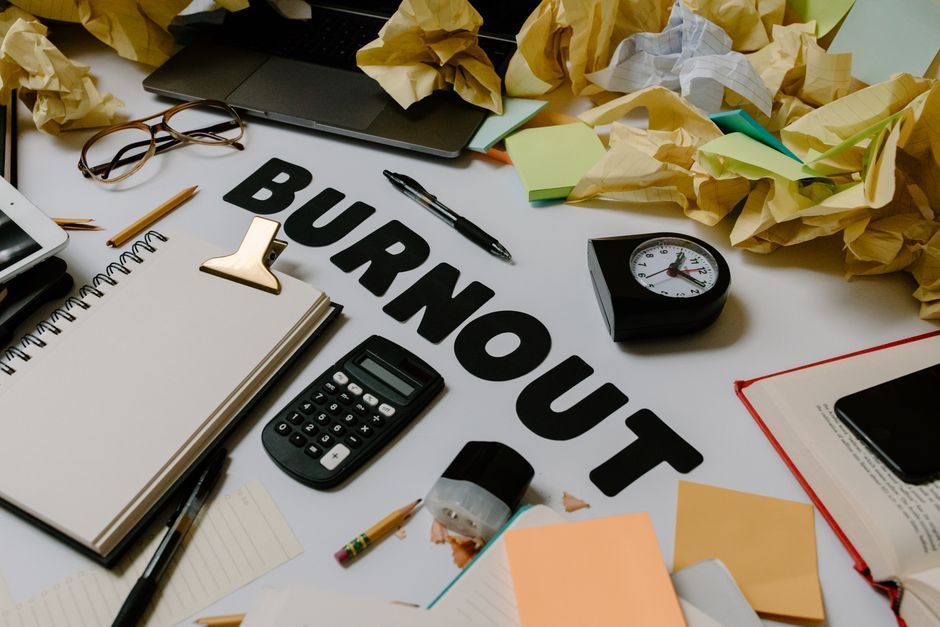
You love your children. You love your life. And you are absolutely exhausted in a way that feels bigger than anything a good night of sleep could fix. If you have been running on empty for longer than you can remember, showing up for everyone while quietly disappearing inside, you are not alone and you are not failing. Mom burnout is one of the most widespread and least talked about mental health experiences affecting mothers today, and it deserves to be taken seriously. Not minimized. Not met with a list of self care tips. Taken seriously.
The cost of going without support does not always announce itself loudly. It builds in the background of a life that looks completely fine from the outside: the exhaustion that never lifts, the growing emotional distance from people you love, the quiet resentment you cannot always name but can definitely feel. If any of that sounds familiar, you are not broken. You are depleted. And that is something that can genuinely change.
I am Tamara Pancoe, a women's therapist in California, and I work with moms who are living this experience every day. Women who are deeply loving, fiercely capable, and quietly coming undone beneath a very composed surface. My therapy for women is built around the specific pressures that drive mom burnout and what it actually takes to heal from the inside out.
What is mom burnout and why does it matter
Mom burnout is a state of chronic physical, emotional, and mental depletion that develops when the demands of motherhood consistently exceed the support, rest, and resources available to meet them. It is not a bad week or a rough season. It is what happens when a woman has been carrying too much for too long without enough replenishment, recognition, or relief.
Signs and symptoms of mom burnout: what it actually looks like
One of the most disorienting things about mom burnout is that it rarely looks like what you expect. You might imagine it as a dramatic collapse, a moment where you simply cannot go on. But in reality, mom burnout tends to be quieter and more insidious than that. It builds slowly in the background of a life that, from the outside, looks completely fine. By the time most moms recognize it, they have been living with it for a long time. These are the signs worth paying attention to.
You are exhausted no matter how much you rest
This is one of the most common and most overlooked signs of mom burnout. You sleep. You take the weekend. You try to slow down. And yet the tiredness does not lift. That is because this kind of exhaustion is not physical. It is emotional and neurological. When you have been carrying an invisible load for long enough, your nervous system stays in a low-grade state of vigilance that rest alone cannot touch. You wake up tired because your system has been working all night processing what your day mind did not have space to feel. If rest is not restoring you, your body is telling you something important.
You feel numb or emotionally flat
Numbness is not the absence of feeling. It is what happens when feelings have been overridden for long enough that your system starts to protect you by dimming the volume on everything. You might notice that things that used to move you no longer do. Joy feels distant. Excitement feels like effort. Even the people and experiences you love most feel slightly out of reach, like you are watching your own life through glass. This emotional flatness is not a personality shift. It is a signal. It is your inner world asking to be acknowledged before it goes any quieter.
You feel irritable or resentful without a clear reason
Resentment is the emotion that tends to surface when a need has gone unmet for a long time without being named. You might find yourself snapping at people you love, feeling disproportionately annoyed by small things, or carrying a low hum of frustration that you cannot trace back to a single source. This is not a character flaw. It is information. Resentment builds when we keep giving what we do not have, when we keep saying yes when we mean no, when we keep showing up for everyone else while quietly neglecting ourselves. The irritability is the pressure valve. What it is pointing to is depletion.
You have lost your sense of self outside of your roles
Think about the last time you did something purely because it made you happy, not because it was productive, not because it helped someone else, not because it was on a list. If that is difficult to remember, pay attention to that. When you cannot remember the last time you felt like a person rather than a function, when your own preferences and desires feel like a distant memory, when you have become so defined by what you do for others that you are not sure who you are apart from it, those are signs of mom burnout that go well beyond simple fatigue. They are signs that the person underneath the roles has not been tended to in a very long time.
You feel disconnected from your children or partner
This one often comes with a heavy layer of guilt, which makes it even harder to acknowledge. You love your children completely. And yet there are moments, sometimes long stretches, where you feel like you are going through the motions of parenting without really being present in it. You are there physically but not emotionally available. You respond, you manage, you get through the day, but the warmth and presence that you want to bring feel inaccessible. This disconnection is not evidence that you are a bad mother. It is evidence that your nervous system is protecting itself from a level of demand it can no longer sustain while staying open at the same time.
You feel guilty for not feeling more grateful
You know you have a good life. You love your children. You are aware that other people have it harder. And yet you feel exhausted, resentful, or quietly miserable, and then immediately guilty for feeling that way because you think you should not. This cycle of depletion followed by guilt followed by more depletion is one of the most painful and invisible aspects of mom burnout. Gratitude and exhaustion can absolutely coexist. You can love your life and still be running dangerously low. The guilt does not mean you are ungrateful. It means you have been taught that your needs are less important than your performance of happiness.
What causes mom burnout and who is most at risk
Mom burnout does not happen because a mother is not strong enough, grateful enough, or organized enough. It happens because the structure of modern motherhood asks an enormous amount of women, often without adequate support, recognition, or rest. The mental load of motherhood, the invisible cognitive work of running a family, tracking who needs what, anticipating problems, managing logistics, and holding the emotional temperature of the household, is constant, rarely acknowledged, and almost never stops even when you are physically resting.
Working mom burnout tends to come from the collision of professional demands and domestic responsibility, the constant negotiation between two worlds that each require your full presence. Stay at home mom burnout often comes from isolation, a lack of external validation, and the invisibility of work that is never finished and rarely acknowledged. The path to burnout may look different, but the experience of depletion at the end of it is the same.
Strategies that actually help you recover from mom burnout
Recovery from mom burnout is possible. I want to say that clearly because many moms who are deep in it cannot imagine feeling genuinely restored. They can imagine functioning better, managing more efficiently, being less snappy with their kids. But feeling actually good? That starts to feel like something that happens to other people. It is not. Recovery is real, and it begins with understanding what genuine healing actually requires.
Redistribute the load honestly and structurally
Mom burnout rarely resolves without addressing the external conditions that created it. If the mental load stays just as heavy and the support remains just as thin, no amount of internal work will hold. Recovery begins with an honest audit of what you are actually carrying and a genuine conversation, not a venting session but a structural conversation, about what needs to change at the household level.
This means moving beyond asking for help, because asking is often the hardest part for burned out moms, and toward proactive ownership by the people around you. Partners, family members, and communities all have a role to play. Isolation amplifies burnout. When the people closest to you take the mental load seriously, something measurable shifts.
Reconnect with your body and your sense of self
Real self care for burned out moms is not a spa day, though rest is genuinely valuable. It is a fundamental reorientation toward your own needs as legitimate and worth protecting. It is learning to recognize what your body is signaling before it has to shout. It is carving out time that belongs entirely to you, not as a reward for finishing the list, but as a non-negotiable part of how you sustain yourself.
Mindfulness practices, even brief ones, can help regulate a nervous system that has been in overdrive. Movement, creative expression, time in nature, and genuine rest all serve the same function: they remind your system that you exist as a person, not just as a provider. Reconnecting with who you are outside of your roles is not indulgent. It is foundational to recovery.
You have been giving everything to everyone long enough
Mom burnout is not a rite of passage. It is not proof that you love your children deeply. It is not something you simply have to endure because this is what motherhood looks like. It is a signal, a clear and urgent one, that the way you have been living is not sustainable and that you deserve support in changing it.
You are allowed to matter in your own life. You are allowed to be a priority, not just when everything else is handled, but now, as you are, with everything still unfinished and imperfect and in motion. That is not selfish. That is what it means to be human.
If you are ready to stop running on empty and start feeling like yourself again, I would love to support you. Reach out today to learn more about therapy in Mill Valley, CA and therapy in San Francisco.

Hi, I’m Tamara. I’m so glad you’ve found your way here.
I am a licensed therapist dedicated to helping my clients heal and find hope while navigating the waves of life.