

Anxiety Therapy | Tamara Pancoe, LMFT, PMH-C
Even when life looks calm on the outside, anxiety can make everything feel heavy beneath the surface. You might appear steady, composed, and capable but inside, your mind may be racing, your body tense, and your emotions stretched thin. Anxiety Therapy offers a grounded space to slow down, understand what you’re carrying, and move through your days with more clarity, steadiness, and ease.
What is anxiety therapy?
Anxiety Therapy is a supportive and evidence-based approach that helps you understand the patterns, fears, and internal pressures driving your worry. Instead of fighting your thoughts or pushing through the overwhelm, we explore them with compassion and curiosity so you can respond from a calmer, more centered place. Together, we look beneath the surface to understand what your anxiety is trying to tell you—and help you build the tools to navigate it with confidence.
Most common signs of anxiety
Anxiety shows up differently for everyone, but many of my clients experience:
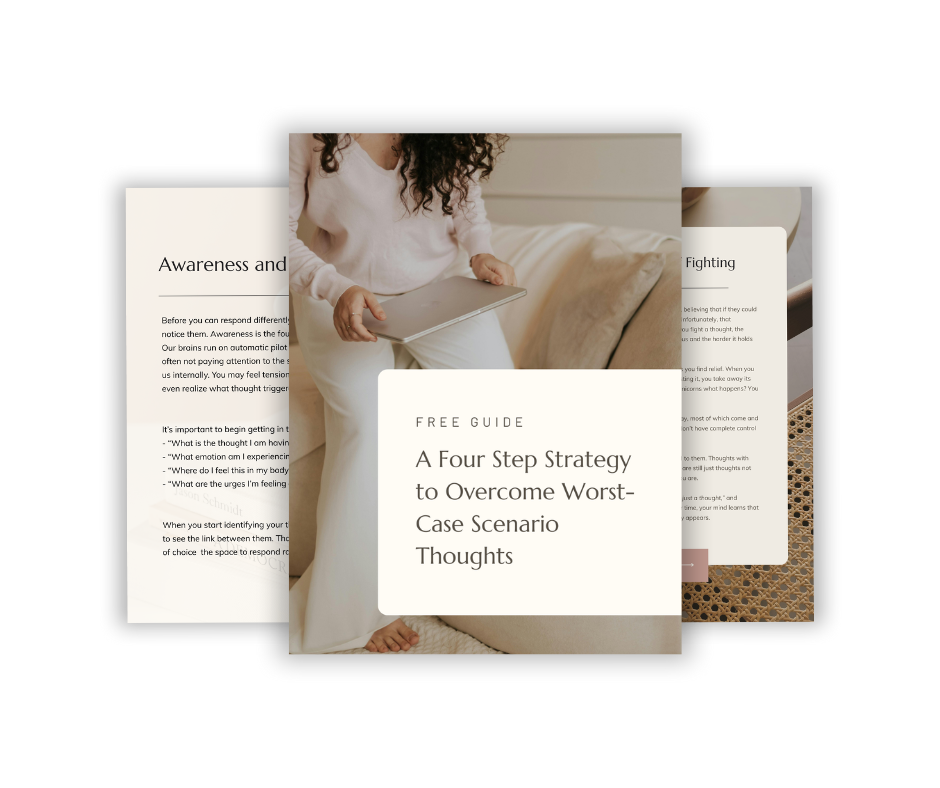
Constant overthinking or worst-case-scenario thoughts
- Feeling overwhelmed even by small tasks
- Trouble resting or “turning off” the mind
- Tightness in the chest, stomach discomfort, or physical tension
- Irritability, impatience, or emotional fatigue
- Difficulty being present, even during meaningful moments
- Holding everything together for others while silently struggling inside
If these feel familiar, Anxiety Therapy can help you find relief.
How do I know if I need anxiety therapy?
You may benefit from Anxiety Therapy if you notice yourself asking questions like:
- Do I feel overwhelmed more often than I feel grounded? When daily tasks or small decisions feel heavier than they should, it may be a sign your nervous system is overextended.
- Do I spend a lot of time worrying or anticipating the worst? If your mind quickly jumps to "what if…" scenarios, therapy can help you create more space and clarity around these thoughts.
- Do I feel tense, on edge, or unable to fully relax even during calm moments? Anxiety often shows up in the body before we consciously feel it.
- Do I hide my stress from others because I don’t want to appear overwhelmed? Many high-functioning women carry anxiety quietly while still showing up for everyone else.
- Do I feel stuck or unsure how to manage the emotional load I’m carrying? If you’ve tried to “push through” but still feel stretched thin, extra support can make a meaningful difference
How I support anxiety in the San Francisco Bay Area
My approach to Anxiety Therapy focuses on slowing down enough to truly listen, to your thoughts, your body, and the patterns shaping your emotional world. We’ll work together to understand what’s fueling your anxiety, release the invisible pressure you’ve been carrying, and create new ways of responding to stress that feel calmer and more compassionate. My goal is for you to feel deeply supported, understood, and steady as you navigate your inner and outer life.
What topics can we talk about in anxiety therapy?
In Anxiety Therapy, we explore the patterns, pressures, and emotions that shape your daily experience. Some of the most common topics we may work through together include:
- Stress and overwhelm that build up beneath the surface: Understanding why everything feels “too much” even when nothing looks wrong on the outside.
- Overthinking and worst-case-scenario patterns: Gaining tools to slow down spiraling thoughts and create more mental clarity.
- People-pleasing, perfectionism, and the pressure to have it all together.: Exploring how these patterns formed and how to move toward a more authentic way of being.
- Origins of anxiety: Considering the root causes for anxiety and why you may have strong reactions to certain triggers
- Emotional exhaustion and the invisible load you carry: Learning how to release the weight of constantly being the responsible or “strong” one.
- Relationship stress and communication challenges: Navigating tension, misattunement, or feeling misunderstood in your closest relationships.
- Setting healthy boundaries without guilt: Creating space for your needs, limits, and emotional well-being.
- Nervous system regulation during high-stress seasons: Developing grounding practices to help you feel steadier and more present.
These conversations help you understand what’s happening beneath your anxiety and build practical, compassionate ways to support yourself moving forward.
How it works
Setting the Foundation
This step helps us create a supportive framework that reflects your needs and intentions.
Building Awareness and Understanding
Together, we will explore where certain reactions come from and begin to understand what has been keeping you stuck.
Creating Change and Cultivating Growth
As therapy progresses, we will focus on developing practical tools and new ways of responding that align with your goals.
Anxiety therapy specialist

As a therapist specializing in Anxiety Therapy, I support women throughout San Francisco who feel overwhelmed by internal pressure yet continue showing up for everyone else. If you’ve been navigating chronic stress, emotional overload, or persistent worry, you don’t have to keep doing it alone. Therapy is a calm place to land, a space to reconnect with yourself, breathe again, and begin feeling more like you.
Tips & resources for coping with anxiety
Here are supportive tools you can begin using alongside anxiety therapy to help calm your mind, regulate your body, and ease daily overwhelm:
- Identify unhelpful thinking styles: Labeling catastrophic thinking, mindreading, and all or nothing thinking will help you cope.
- Limit overstimulation and information overload: Taking intentional breaks from social media, news, or constant notifications can reduce pressure and give your mind space to breathe.
- Practice radical acceptance of your emotions: While counterintuitive, acknowledging and allowing our emotions without judgment creates spaciousness.
- Create small routines that support steadiness: Gentle structure such as a consistent morning ritual or evening unwind practice can help you feel more anchored throughout the day.
- Name your emotions instead of pushing them down: Saying “I feel anxious,” “I feel overwhelmed,” or “I feel tense” helps reduce intensity and gives your nervous system a clear signal of what’s happening.
- Talk to someone you trust about what you’re carrying: Sharing your internal experience softens the sense of isolation that often comes with anxiety.
- Practice simple grounding exercises: Techniques like deep breathing, tuning into physical sensations, or placing your feet firmly on the floor can help interrupt spiraling thoughts and bring you back into the present moment.

Hi, I’m Tamara. I’m so glad you’ve found your way here.
I am a licensed therapist dedicated to helping my clients heal and find hope while navigating the waves of life.
Therapy investment
I help women who feel anxious, depleted, or emotionally stretched thin find steadiness, clarity, and a deeper sense of self-trust.
Whether you’re navigating anxiety, a major life change, or simply trying to keep up with the demands of daily life, therapy with me offers a soft place to land and feel supported.
$200 per 50 minute session
FAQ
How can I reduce anxiety fast?
Quick relief is possible through grounding techniques that calm the body and create distance from overwhelming thoughts. Simple tools like slow breathing, sensory grounding, placing your feet firmly on the floor, or naming what you’re feeling can help regulate your nervous system within minutes. In therapy, we work on both immediate strategies and long-term support so anxiety feels less consuming over time.
How long does it take for anxiety therapy to work?
Many clients notice small shifts within a few weeks feeling a bit calmer, more aware of their patterns, or less reactive. Deeper changes often unfold gradually as we explore what’s beneath the anxiety and build supportive tools together. The pace is always tailored to your needs and comfort.
Can anxiety go away, or will I have it forever?
Anxiety is a normal human response, but it doesn’t have to control your life. With the right support, its intensity and frequency can decrease significantly. Therapy helps you understand your triggers, regulate your emotions, and build a more compassionate relationship with your thoughts so you can feel more steady and in control.
Is anxiety always caused by a specific event or trauma?
Not always. Anxiety can develop from chronic stress, perfectionism, emotional overload, relationship dynamics, or long-term patterns of pushing through without support. You don’t need a single defining event to justify feeling overwhelmed. Therapy helps uncover the subtle, often invisible pressures contributing to your anxiety.
What should I expect in my first anxiety therapy session?
Your first session is a gentle, pressure-free space to talk about what you’ve been experiencing. We’ll explore your symptoms, history, and what you’re hoping to feel or understand. You won’t need to have everything figured out. This conversation helps us set a pace that feels safe, supportive, and grounded for you.